






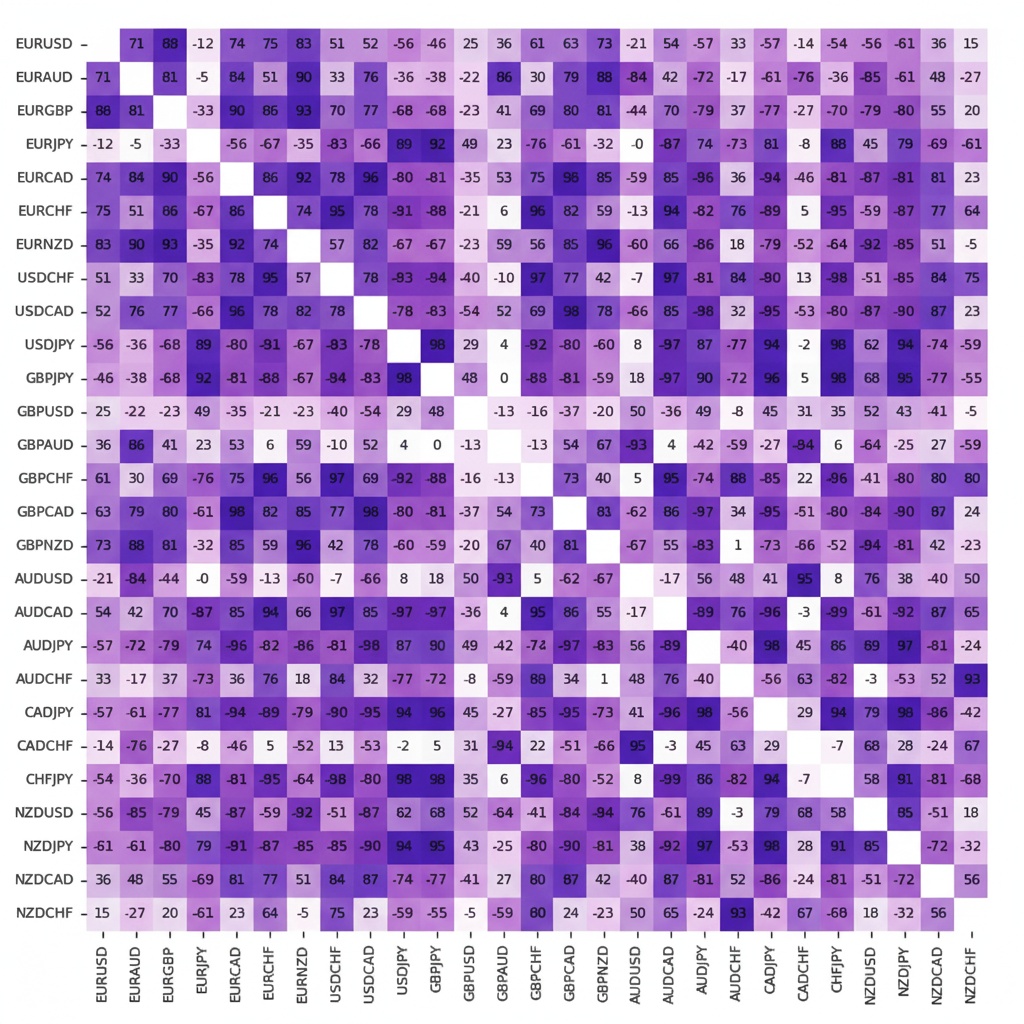


The New Zealand dollar extended its impressive momentum to finish as this week's strongest-performing major currency, while the Canadian dollar also outperformed most of its peers. At the other end of the table, the Japanese yen came under broad selling pressure, with the Swiss franc also lagging behind as investors continued rotating away from traditional safe-haven currencies.
Let's recap what drove the market over the past week before exploring the biggest economic events that could shape forex markets in the days ahead.
What moved the forex market this week?
The New Zealand dollar remained the market's standout performer after the Reserve Bank of New Zealand left interest rates unchanged recently while maintaining a relatively balanced policy outlook.
At the same time, improving global risk sentiment encouraged investors to favour growth-linked currencies, helping the kiwi extend its gains against every major counterpart.
The Canadian dollar also enjoyed a strong week, driven by resilient domestic data and broad US dollar weakness. Meanwhile, the US dollar traded mixed as inflation data broadly met expectations, leaving markets with few reasons to significantly alter their views on future Federal Reserve policy.
Elsewhere, the Japanese yen was the week's weakest currency despite a relatively quiet domestic calendar. As global risk appetite improved, demand for traditional safe-haven assets faded, leaving the yen under pressure against nearly every major currency. The Swiss franc experienced a similar trend, reflecting investors' preference for higher-risk assets over defensive currencies.
What could move the forex market next week?
The spotlight shifts to the US dollar, euro and British pound this week, with several high-impact releases capable of shaping expectations for central bank policy.
Canada also has a busy calendar led by inflation and retail sales data, while Japan's trade figures and inflation report will provide fresh insight into the country's economic momentum.
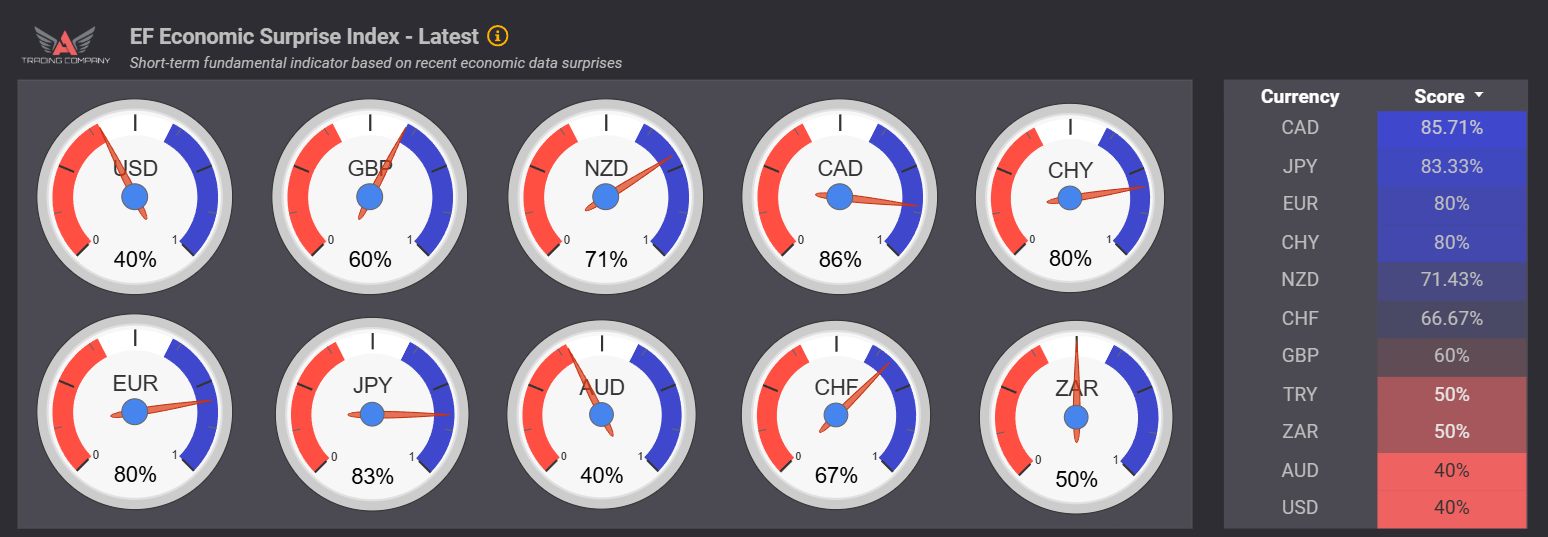
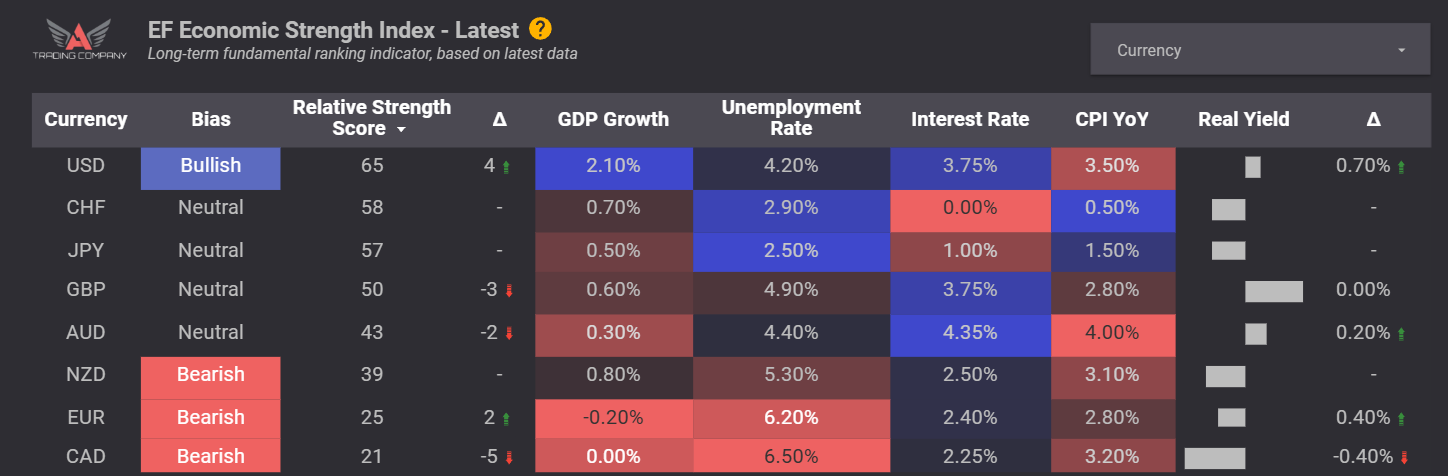
Let's explore these currencies in more detail. Below are two images (the Eco Surprise and Eco Strength indices from Edgefinder) that provide an overview of how the respective economies line up relative to one another.
USD – Labour Market Resilience Could Keep the Dollar Supported
Although the calendar is lighter than in recent weeks, Thursday's Initial Jobless Claims will be the standout release for the US dollar. Markets expect claims to edge up only slightly from 208,000 to 210,000, suggesting the labour market remains resilient. Traders will also monitor ADP employment data and the Chicago Fed National Activity Index for additional clues about the strength of the US economy.
If the Eco Surprise and Eco Strength indices continue to favour the US, another week of resilient data could provide fresh support for the dollar.
EUR – ECB Decision Could Set the Tone for the Euro
The euro faces one of its busiest weeks of the month, headlined by Thursday's ECB interest rate decision and President Christine Lagarde's press conference. Markets expect the ECB to leave its key policy rates unchanged, meaning investors will focus on any changes to the Bank's outlook. Flash PMIs from Germany and France, together with Germany's GfK Consumer Confidence survey, should also provide a fresh assessment of the eurozone economy.
If business activity continues improving and the ECB maintains a balanced tone, the euro could build on recent momentum.
GBP – Inflation and Retail Sales Could Drive Sterling
The pound has a packed calendar beginning with Tuesday's labour market report before attention turns to Wednesday's inflation figures and Friday's retail sales release. Headline inflation is expected to ease slightly from 2.8% to 2.6%, while the unemployment rate is forecast to remain unchanged at 4.9%. Retail sales are also expected to slow compared with the previous month.
These releases should offer a clearer picture of the UK economy. If inflation proves stickier than expected or consumer spending remains resilient, sterling could continue outperforming.
CAD – Inflation Data Takes Centre Stage
The Canadian dollar's biggest catalyst arrives on Monday with the latest inflation report, followed by Thursday's retail sales figures. Headline CPI is expected to slow slightly from 3.2% to 3.0%, while core inflation is forecast to remain unchanged. Retail sales are expected to improve modestly later in the week.
Should inflation remain elevated or spending exceed expectations, the loonie could extend its recent strength. Conversely, softer data may reduce confidence in Canada's economic outlook.
JPY – Inflation Could Determine Whether the Yen Recovers
The Japanese yen enters the week after a difficult performance but has several important releases that could influence sentiment. Wednesday's trade balance will provide an update on external demand, while Friday's inflation report is expected to show headline CPI rising from 1.5% to 1.7%. Flash PMI surveys later in the day will offer further insight into business activity.
If inflation continues to strengthen and economic data surprises to the upside, the yen may recover some of its recent losses. However, another disappointing week of data could leave the currency under pressure.
Conclusion
The currencies we have highlighted are those with the best chance of some action. However, you are always free to analyse other pairs in the vast forex market.
For a granular look at the most impactful events in the forex economic calendar, read our article here.
