





TL:DR
- Interest rates are one of the biggest drivers of currency movements because they influence borrowing, spending, and global capital flows.
- Higher interest rates tend to strengthen a currency, while lower rates often weaken it.
- Central banks adjust rates mainly to control inflation and support economic growth, making their decisions critical for forex traders.
- Markets react as much to, or more to, expectations of rate changes than to the actual decision. Sometimes, the move is often already priced in.
- Long-term currency trends are often driven by interest rate cycles: rising rates support strength, while falling rates lead to weakness.
If there is one factor that consistently drives currency markets, it’s interest rates. Their impact sits at the core of how currencies gain or lose value over time.
At a basic level, interest rates determine the cost of borrowing money and the return on savings and investments. But in forex, their influence goes much deeper. They shape capital flows, influence investor behaviour, and reflect a country's broader economic outlook.
Understanding interest rates and how markets react to them is essential for any trader looking to build a solid, fundamentals-based approach.
Interest Rates: The Price of Money
Interest rates are often described as the price of money. When a central bank like the Federal Reserve sets rates, it is effectively deciding how expensive it is to borrow money across the economy.
When interest rates rise, borrowing becomes more expensive. This affects everything from mortgage rates and auto loans to personal loans and business financing. As the cost of borrowing increases, consumers and businesses tend to spend less, which can slow down economic growth.
On the other hand, when interest rates fall, borrowing becomes cheaper. Lower borrowing costs encourage consumer spending, business investment, and overall economic activity. This is why central banks often cut rates during periods of weak growth.
The Role of Central Banks
Interest rates don’t move randomly. Central banks control them through monetary policy.
For example, in the US, the Federal Reserve Bank sets its federal funds rate, which influences lending rates across the economy. When the Fed raises rates, it is usually trying to control inflation. When it lowers the federal funds rate, it is typically aiming to stimulate growth.
Other central banks, such as the Bank of England and the European Central Bank, follow similar principles. Their decisions are based on inflation levels, employment data, economic conditions, and growth expectations.
Traders closely watch these interest rate changes because they shape expectations across the financial markets.
Why Interest Rates Matter in Forex
Currencies are constantly competing with one another. In this environment, interest rates play a key role in determining where capital flows.
When a country offers higher interest rates, it becomes more attractive to investors. Why? They can earn better returns on their initial investment, whether through bonds, savings accounts, or other fixed income investments. This creates demand for that currency, often leading to appreciation.
Conversely, when lower interest rates are in place, returns are less attractive. Investors may move their capital elsewhere, putting downward pressure on the currency.
This is one of the clearest ways that interest rates influence forex markets.
Rising Interest Rates and Declining Interest Rates
In general, rising interest rates tend to support a currency. When rates increase:
- Higher yields attract foreign investment
- Demand for the currency increases
- Capital flows into the economy
For example, if the Fed raises rates while other central banks remain unchanged, the US dollar may strengthen due to this relative advantage.
Another crucial reason central banks raise interest rates is to control inflation. When inflation rises, the purchasing power of money falls. To combat this, central banks raise interest rates to reduce spending and slow demand. This is closely tied to inflation expectations. If markets believe inflation will remain high, they may expect further rate adjustments. This can drive currency movements even before decisions occur.
However, it’s not always that simple. Markets are forward-looking. If we expect rising rates, the move may already be “priced in.” This is why traders focus not just on rate decisions, but on interest rate expectations.
When interest rates fall, the opposite dynamic often occurs. Lower returns on savings and investments make a currency less attractive.
At the same time, lower borrowing costs can stimulate growth by encouraging:
- Increased spending
- Business expansion
- Investment activity
Lower interest rates can support the economy, but from a currency perspective, the immediate effect is often weakness, especially if other countries maintain higher interest rates.
Interest Rates Impact on Other Markets
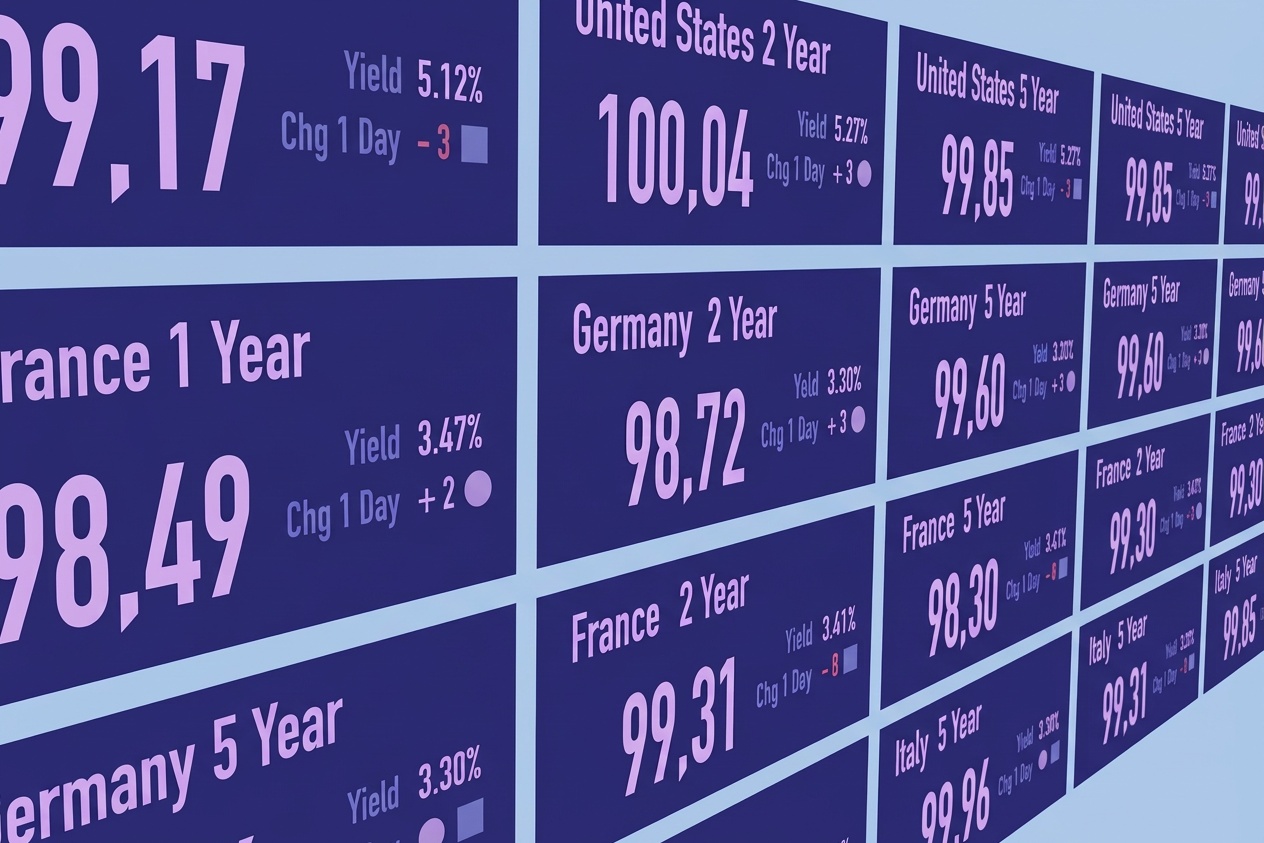
The impact of interest rates extends beyond forex into other asset classes. In the bond market, interest rates and bond prices have an inverse relationship. When rates rise, bond prices fall because new bonds offer better yields. This makes older bonds less attractive to bond investors.
When rates fall, the opposite happens: bond prices rise as existing yields become more attractive.
For equities, higher interest rates can pressure the stock market. As borrowing becomes more expensive, company profits may decline, and stock prices can fall. Lower rates, on the other hand, often support equities by encouraging investment and liquidity.
Interest Rate Fluctuations, Market Expectations and Long-Term Trends
One of the biggest mistakes traders make is focusing only on the current rate. In reality, markets react more to interest rate fluctuations and expectations than to the actual number.
For example:
- If the market expects rates to rise and they do → limited reaction
- If rates rise more than expected → strong reaction
- If rates don’t rise when expected → negative reaction
This is why understanding expectations is key to interpreting how interest rates impact the market.
While short-term moves can be influenced by news and sentiment, long-term trends in forex are often driven by interest rate cycles.
Periods of:
- Rising rates → currency strength
- Declining interest rates → currency weakness
These cycles reflect broader changes in economic conditions and policy direction. Understanding where a country sits in this cycle can help traders align with longer-term trends rather than getting caught in short-term noise.
How Traders Use Interest Rates in Strategy
For traders, interest rates are not just background information; they are central to building a trading strategy.
A typical approach might involve:
- Identifying which central banks are tightening (raising rates)
- Comparing rate paths between countries
- Aligning trades with the direction of policy
For example, pairing a currency with higher interest rates against one with declining interest rates can create strong trending opportunities. This is often seen in macro-driven strategies that focus on divergence between economies.
Final Thoughts
The impact of interest rates goes far beyond simple rate changes. They influence borrowing, spending, investment, and ultimately the direction of currencies.
The key takeaway is this: it’s not just about whether rates go up or down. It’s about how those changes compare to expectations and how they shape the broader economic outlook.
By understanding how interest rates influence markets, you move from reacting to headlines to interpreting the bigger picture, and that’s where the real edge begins.
