






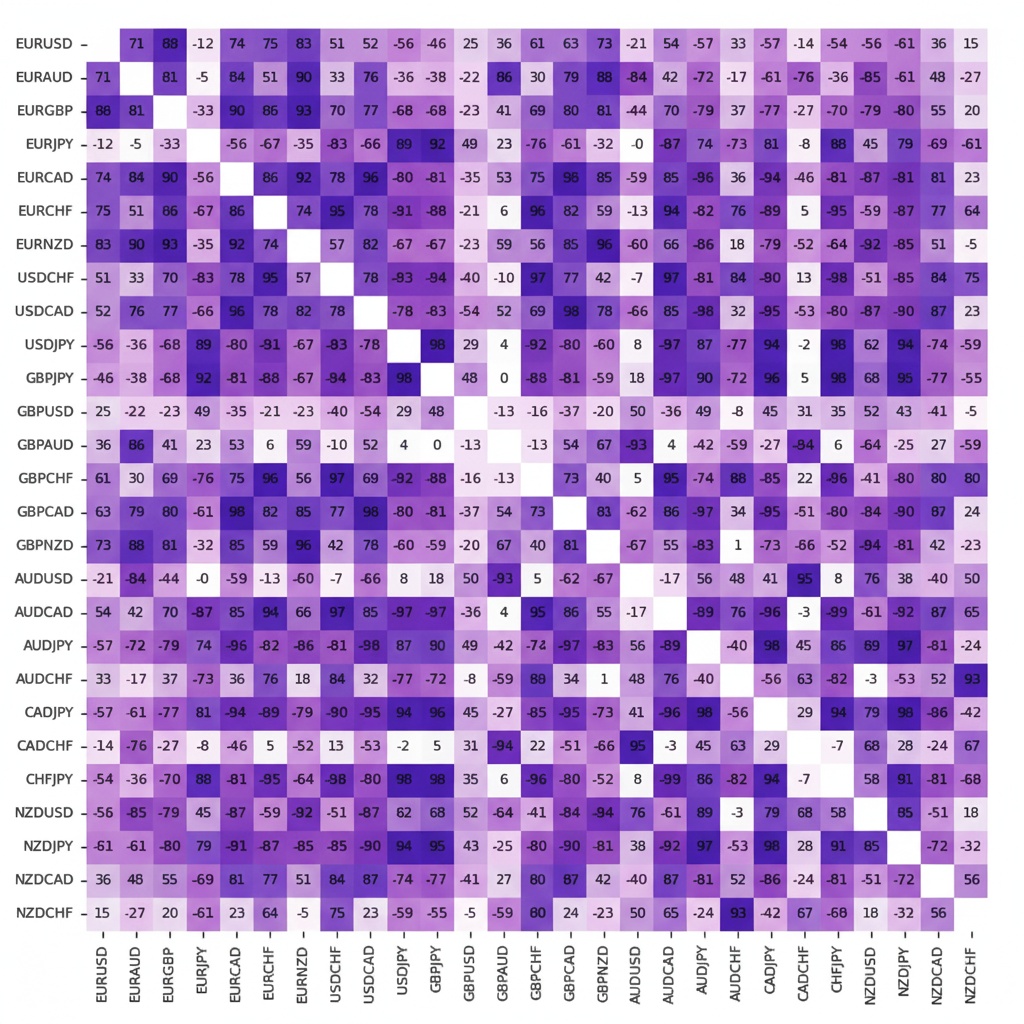


The Australian dollar emerged as this week's strongest-performing major currency, posting gains against every major counterpart as improving sentiment and supportive economic expectations fuelled demand. In contrast, the Swiss franc was the weakest performer, while the US dollar also enjoyed a relatively strong week as traders continued favouring currencies backed by resilient economic fundamentals.
Let's recap what drove the market over the past week before exploring the biggest economic events that could shape forex markets in the days ahead.
What moved the forex market this week?
The Australian dollar was the strongest-performing major currency, gaining against every one of its peers. Its broad advance was supported by stronger economic sentiment and continued expectations that persistent inflation could keep the Reserve Bank of Australia cautious about lowering interest rates. The US dollar also performed well, notably gaining around 1% against the British pound and 0.9% against the New Zealand dollar. Resilient US economic expectations and the prospect of the Federal Reserve keeping interest rates higher for longer helped maintain demand for the greenback.
Meanwhile, the British pound came under pressure despite the release of key UK inflation and retail sales figures. Sterling weakened against both the US and Australian dollars as traders reassessed the UK economic picture and the likely direction of Bank of England policy. The Swiss franc was the week's weakest-performing currency, falling sharply against the Australian and US dollars. With no major domestic catalyst capable of providing sustained support, reduced safe-haven demand and the strength of risk-sensitive currencies weighed on the franc.
Elsewhere, the euro and Japanese yen also struggled against the week's strongest currencies. The ECB's decision to leave rates unchanged offered limited support to the euro, while Japan's inflation data failed to prevent the yen from losing ground against both the US and Australian dollars.
What could move the forex market next week?
Attention now shifts to one of the busiest economic calendars in recent weeks. Interest rate decisions from the Federal Reserve, Bank of England and Bank of Japan headline the schedule, while key GDP, inflation and labour market releases from the US and eurozone could significantly influence market sentiment. Let's explore these currencies in more detail.
USD – Fed Decision and GDP Could Dictate the Dollar's Direction
The US dollar has by far the busiest calendar of the week. Wednesday's Federal Reserve interest rate decision is expected to result in another hold at 3.75%, meaning markets will focus on Chair Jerome Powell's comments for clues on future policy.
Attention then turns to Thursday's advance GDP reading, Core PCE inflation, Personal Spending and Initial Jobless Claims. GDP growth is forecast to edge up from 2.1% to 2.2%, while Core PCE inflation is expected to cool slightly. If the US continues delivering resilient economic data, the dollar could remain well supported.
GBP – Bank of England Decision Could Keep Sterling in Focus
Sterling has one of the most eventful weeks of any major currency, with the Bank of England's interest rate decision, Monetary Policy Report and MPC meeting minutes all scheduled for Thursday.
Markets expect the Bank Rate to remain unchanged at 3.75%, making the accompanying guidance particularly important. Earlier releases on mortgage lending and Friday's Nationwide House Price Index should provide additional insight into the health of the UK economy.
If policymakers maintain a cautious tone while economic conditions remain stable, the pound could preserve its recent resilience.
JPY – BoJ Decision Could Trigger Volatility
The Japanese yen faces a crucial week, with Friday's Bank of Japan interest rate decision and Governor Kazuo Ueda's remarks likely to dominate trading.
The BoJ is expected to leave its policy rate unchanged at 1.00%, but investors will closely examine the Quarterly Outlook Report for any changes to the inflation or growth outlook. Consumer confidence, retail sales and industrial production earlier in the week will also help shape expectations.
Should the BoJ adopt a more hawkish tone than expected, the yen could recover after this week's weakness.
EUR – Growth and Inflation Will Test the Euro's Recovery
The eurozone calendar is packed with growth, confidence and inflation data, making it one of the week's most closely watched regions.
Germany's Ifo Business Climate begins the week before attention shifts to flash GDP estimates for Germany and the wider eurozone. German preliminary inflation closes out the week and could influence expectations for future ECB policy.
If growth stabilises while inflation remains resilient, the euro may continue building momentum.
AUD – Inflation Could Determine Whether the Aussie Extends Its Rally
After finishing as this week's strongest-performing major currency, the Australian dollar immediately faces another important test.
Wednesday's monthly CPI report is expected to show inflation edging higher, while the RBA's preferred trimmed mean measures are also forecast to remain elevated. Governor Michele Bullock's speech and Friday's producer price data will provide further insight into the Reserve Bank of Australia's policy outlook.
If inflation surprises to the upside and the RBA maintains a firm stance, the Aussie could extend its recent outperformance.
Conclusion
The currencies we have highlighted are those with the best chance of some action. However, you are always free to analyse other pairs in the vast forex market.
For a granular look at the most impactful events in the forex economic calendar, read our article here.
