








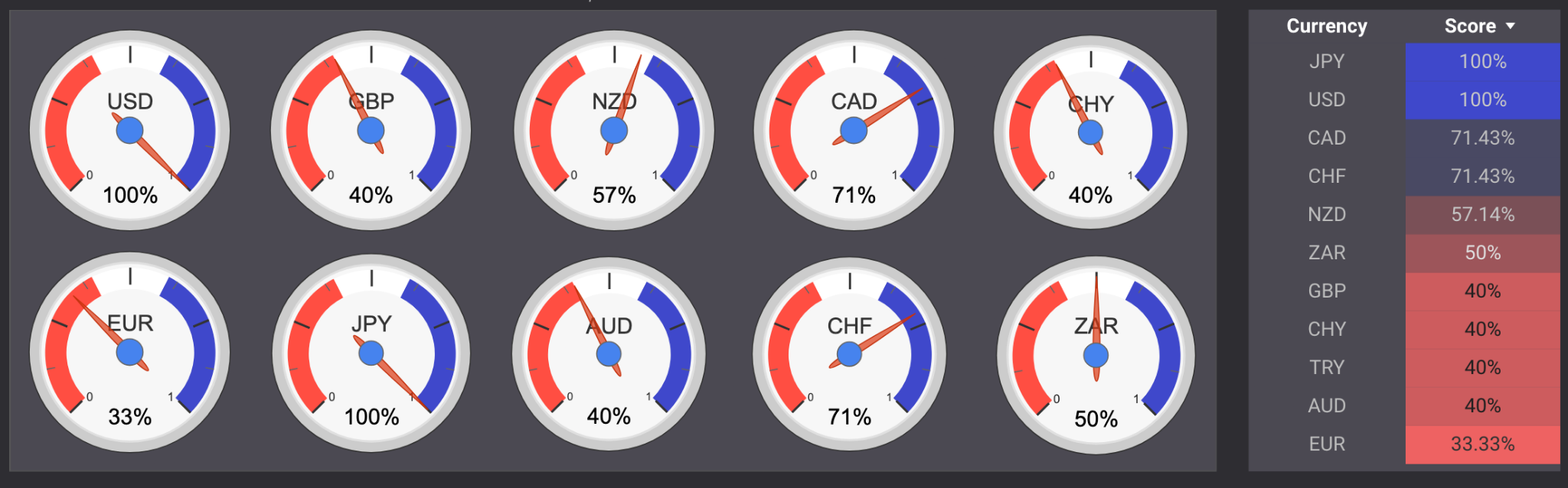
The US dollar, Japanese yen, and Canadian dollar emerged as the week's strongest-performing major currencies after generally outperforming economic expectations. We aren't surprised by USD and JPY.
The dollar continued to benefit from a resilient labour market, inflation, and growth data, while the yen was supported by encouraging business activity and trade figures despite softer inflation. Canada also climbed the rankings thanks to stronger retail spending and upside inflation surprises.
Meanwhile, the Australian and New Zealand dollars lagged. Australia's softer inflation readings and relatively quiet economic calendar limited upside momentum. On the other hand, New Zealand recorded only modest improvements from GDP and trade data, leaving both currencies trailing the stronger North American currencies.
Elsewhere, the euro remained under pressure following a series of disappointing industrial, inflation, and labour releases, while sterling enjoyed a solid week on the back of robust employment and retail sales data.
What moved the forex market this week?
Interest rate decisions from the Bank of England and the Swiss National Bank were among this week's highlights, even though both central banks left policy rates unchanged as expected. Instead, traders focused on the underlying economic data.
The British pound benefited from another strong labour market report and resilient retail sales, while the Canadian dollar gained support from stronger-than-expected inflation. The US dollar remained one of the strongest performers despite softer housing data later in the week. A series of recent positive surprises in labour, GDP, and inflation helped maintain its overall lead over other markets.
Meanwhile, the euro continued to lag after weaker industrial, inflation and labour releases, while Australia also struggled as softer inflation figures reinforced expectations that price pressures are gradually easing.
What could move the forex market next week?
The US dollar takes centre stage this week with the closely watched Nonfarm Payrolls report. At the same time, the euro has several key inflation releases that could shape expectations for the European Central Bank. Australia also remains in focus with the RBA meeting minutes and trade data, while Japan's Tankan survey should provide fresh insight into business confidence.
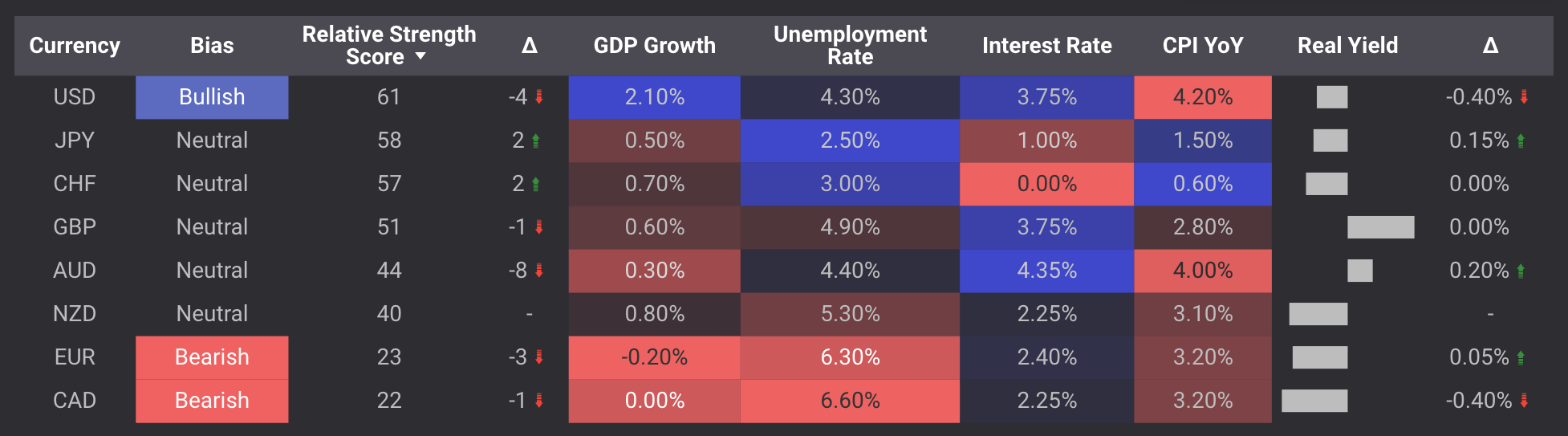
Let's explore these four currencies in more detail. Below are two images (the Eco Surprise and Eco Strength indices from Edgefinder) that provide an overview of how the respective economies compare.
USD – Strong Fundamentals Could Keep the Dollar in the Lead
The US has a busy, important economic calendar this week, as is usually the case at the start of every month. While markets will monitor JOLTS job openings, ADP employment, and ISM Manufacturing PMI, Thursday's labour market report is expected to be the biggest catalyst.
Nonfarm Payrolls are forecast to slow from 172,000 to 110,000, although Initial Jobless Claims are expected to improve, and the unemployment rate is forecast to remain unchanged at 4.3%. Manufacturing activity is also expected to ease only slightly, suggesting the broader economy remains relatively resilient.
If the Eco Surprise and Eco Strength indices continue to favour the dollar, the greenback could remain well supported despite expectations for slower hiring. As always, any meaningful deviation in the labour market figures could trigger heightened volatility.
EUR – Improving Sentiment Could Help the Euro Recover
The euro has a busy week ahead, with inflation figures, economic sentiment surveys, and labour market data all due for release. Headline inflation is expected to edge slightly lower from 3.2% to 3.1%, while core inflation is forecast to remain unchanged at 2.6%. Meanwhile, economic sentiment is expected to improve, and the unemployment rate is projected to remain at a relatively low 6.3%.
These releases should provide a clearer picture of whether the eurozone economy continues to stabilise. If the Eco Surprise Index points towards improving momentum, resilient inflation and stronger confidence data could provide modest support for the euro.
However, weaker inflation or deteriorating labour market figures may limit any upside.
AUD – Mixed Releases Could Keep the Aussie Under Pressure
Australia's calendar is lighter this week. Building approvals are expected to rebound after last month's decline, although the trade surplus is forecast to narrow. Markets will also analyse the RBA minutes for any clues on future interest rate policy following recent developments.
If the Aussie continues to rank among the weaker-performing currencies on the Eco Surprise Index, these releases may struggle to reverse sentiment unless the RBA adopts a more hawkish tone than markets currently expect.
JPY – Business Confidence Will Determine Whether the Yen Can Extend Gains
The Tankan Large Manufacturers Index is expected to fall from 17 to 13, while consumer confidence is also forecast to soften slightly. On a more positive note, retail sales are expected to accelerate and the unemployment rate is forecast to remain low at 2.5%.
Although the survey data points to some moderation in business sentiment, Japan's labour market remains resilient. If the Eco Surprise Index continues to rank the yen among the stronger economies, solid domestic fundamentals could help limit downside pressure despite softer confidence readings.
Conclusion
The currencies we have highlighted are those with the best chance of some action. However, you are always free to analyse other pairs in the vast forex market.
For a granular look at the most impactful events in the forex economic calendar, read our article here.
